
Quick Answer: If your interview is tomorrow and you’re starting from zero, focus on four things in order: research the organization for 20 minutes, prepare answers for the 5 most likely questions using bullet points (not scripts), organize your documents and outfit tonight, and get proper sleep instead of cramming until 2 AM. In 24 hours, focused preparation on the right things beats panicked preparation on everything.
Most interview prep guides assume you have two weeks. That’s not always the reality — you get a call letter with three days’ notice, or an HR manager schedules you for tomorrow morning after a rushed phone screening. This guide is built specifically for that situation: limited time, real pressure, and a need to prioritize what actually moves the needle in an FPSC panel or a private HR round.
Why Last-Minute Prep Can Still Work
There’s a common myth that under-prepared candidates are automatically doomed. That’s not quite true. Panels aren’t expecting perfection — they’re evaluating clarity, composure, and whether you understand the role. With 24 hours, you can’t build deep expertise, but you can absolutely build enough structure to sound confident and specific instead of vague and rattled.
Definition Box — Key Terms:
- Call Letter: The official notice confirming your interview date, time, and venue — always re-check this first, since timing mistakes are the most common last-minute disaster.
- Selection Board: The panel (typically 3–5 members in FPSC/PPSC interviews) assessing your knowledge, personality, and communication.
- Elevator Answer: A short, structured response (under 60 seconds) that hits the key point without rambling — critical when you don’t have time to memorize long answers.
Hour-by-Hour: What to Actually Do
First 20 Minutes: Confirm the Basics
Before anything else, re-read your call letter or the job posting. Confirm:
- Exact date, time, and venue (Google Map it if you haven’t been there before)
- What documents are required
- Dress code expectations, if specified
Pro Tip: This step gets skipped more often than you’d expect when people are stressed and rushing. A wrong venue or missed document requirement can undo hours of good preparation.
Next 20 Minutes: Research the Organization
You don’t need deep research — you need three usable facts.
For government posts: Look up the department’s core function and one recent development relevant to it (a new policy, project, or initiative).
For private-sector roles: Check the company’s website homepage and one recent news article about them. Note what they do, who their main clients or market is, and anything recent worth mentioning.
Write these three facts down. You’ll use them in your “why do you want to work here” or “what do you know about us” answer.
Next 40 Minutes: Prepare Bullet-Point Answers, Not Scripts
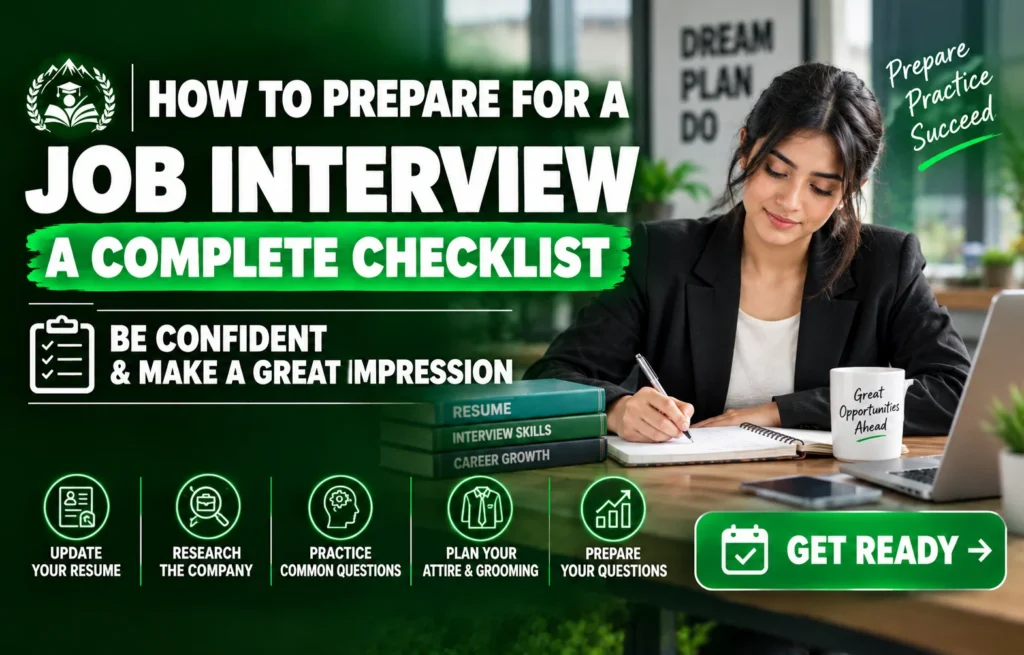
With limited time, don’t try to write out full paragraphs to memorize — it wastes time and sounds robotic anyway. Instead, prepare bullet points for these five questions:
- Tell me about yourself — 3 bullets: current status, most relevant experience, why this role
- Why should we hire you? — 2–3 strengths + how they match the role
- What’s your biggest weakness? — one honest, minor weakness + what you’re doing about it
- Why this organization/role? — use the 3 facts from your research step
- Do you have a question for us? — prepare one genuine question in advance so you’re not caught off guard
Expert Tip: Say each answer out loud once, even if you’re alone in your room. Speaking it changes how it sounds compared to just thinking it through — you’ll catch awkward phrasing immediately.
Next 20 Minutes: Sort Documents and Outfit
Lay out everything physically tonight, not tomorrow morning:
For government interviews: Original CNIC, call letter, educational certificates, domicile certificate (if required), photographs as specified.
For private-sector interviews: Printed CV copies, any relevant certificates or portfolio pieces.
Iron your clothes and set them aside. Decision fatigue tomorrow morning is real — removing this choice tonight saves both time and stress.
Common Mistake: Assuming you’ll “figure it out in the morning.” Mornings before interviews are rarely calm enough for last-minute searching.
Final Step: Protect Your Sleep
This is the step most last-minute preparers skip entirely — and it’s arguably the most damaging mistake to skip. Staying up until 2 AM cramming answers rarely improves performance; it just guarantees you’ll be foggy and anxious during the actual interview. Aim to stop all prep at least an hour before your normal bedtime, even if you feel like you haven’t done enough.
What to Skip When Time Is Limited
Not all interview prep advice is equally urgent with 24 hours on the clock. Skip these unless you genuinely have spare time:
- Deep research into department history or company financials
- Preparing answers for every possible question (focus on the 5 core ones above)
- Elaborate mock interviews with multiple people
- Researching every panel member individually
Government vs. Private: What to Prioritize With Limited Time
| Priority | Government (FPSC/PPSC) | Private Sector |
|---|---|---|
| Highest priority | Documents, arrival time, procedural readiness | Company research, tailored “why us” answer |
| Can prepare loosely | Deep departmental history | Full company history |
| Dress code | Non-negotiable, formal and conservative | Formal, slightly more flexible |
| Answer tone | Structured, respectful, procedural | Slightly more conversational, results-focused |
Frequently Asked Questions
Can I really prepare well for an interview in just one day?
Yes, if you focus on structure over volume — a handful of well-organized answers and correct logistics will outperform panicked, unfocused cramming every time.
Should I stay up late to prepare more thoroughly?
No. Being well-rested and moderately prepared beats being exhausted and overprepared. Panels notice composure more than they notice minor gaps in polish.
What if I don’t have time to research the company at all?
Even 10 minutes on their homepage is better than nothing — note their main service or product and one recent update, and you’ll have enough to sound informed.
Is it okay to admit I only had short notice for this interview?
Generally, no need to mention it unless directly asked. Focus on presenting yourself as prepared and confident rather than drawing attention to limited prep time.
What’s the single most important thing to get right with limited time?
Logistics — the right documents, the right venue, arriving on time. A great answer means nothing if you’re late or missing something required for entry.
Final Word
Twenty-four hours isn’t enough time to become an expert, but it’s more than enough time to walk in prepared, calm, and specific. Confirm your logistics first, build simple bullet-point answers for the core questions, sort your documents and outfit the night before, and protect your sleep instead of sacrificing it. Candidates who use their limited time wisely often perform just as well as those who had two weeks — because in the interview room, what matters most is how clearly and calmly you present what you already know.