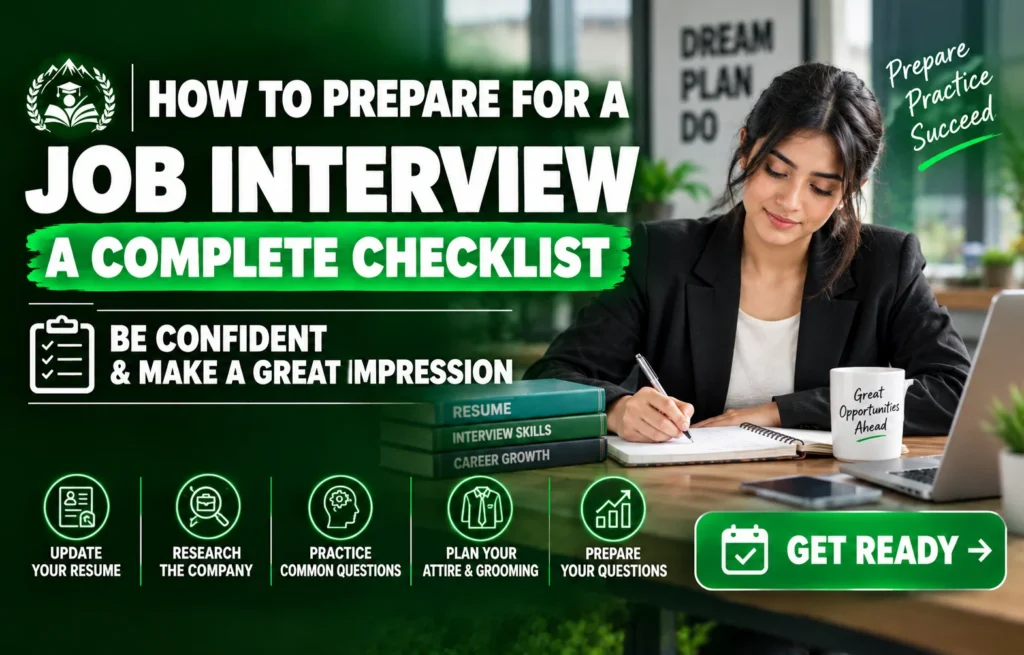
Quick Answer: Solid interview preparation comes down to five things: researching the organization, preparing structured answers to common questions, planning what to bring and wear, practicing out loud, and taking care of the logistics (route, timing, documents) the night before. Miss any one of these, and even a strong candidate can stumble on interview day.
Most “how to prepare for an interview” guides online assume you’re prepping for a corporate office in London or Dubai — dress codes, small talk tips, and little else. That’s not much help if you’re preparing for an FPSC selection board that expects procedural sharpness, or a private HR round in Lahore where punctuality and documentation matter just as much as your answers. This guide walks through preparation the way it actually plays out for interviews in Pakistan.
Why Preparation Matters More Than Talent Alone
Two candidates can have near-identical qualifications, and the one who prepared properly will almost always outperform the one who didn’t. Panels aren’t just measuring what you know — they’re measuring how seriously you’ve taken the process itself. A well-prepared candidate answers calmly, brings the right documents, and doesn’t waste the panel’s limited time. That composure alone often separates a selected candidate from a waitlisted one.
Definition Box — Key Terms:
- Selection Board: The panel (often 3–5 members) that conducts FPSC/PPSC interviews, scoring you on subject knowledge, personality, and general aptitude.
- Interview Call Letter: The official document confirming your interview date, time, and venue — required for entry into most government interview premises.
- Mock Interview: A practice interview, often with a friend, mentor, or teacher, used to simulate the real experience before the actual date.
Step 1: Research the Organization or Department Thoroughly
This is the step most candidates skip — and it shows immediately in their answers.
For government posts (FPSC/PPSC): Understand the department’s core function, its place within the broader government structure, and any recent policy changes relevant to it. If you’re applying through FPSC, review the specific service group and its typical responsibilities.
For private-sector roles: Know what the company actually does, its recent projects or expansions, and how the role you’re applying for fits into that. A quick look at their website and recent news coverage takes fifteen minutes and instantly puts you ahead of candidates who didn’t bother.
Pro Tip: Write down three facts about the organization you can naturally work into your answers — for “why do you want to work here” or “what do you know about us.”
Step 2: Prepare Structured Answers, Not Scripts
Trying to memorize word-for-word answers almost always backfires — panels can tell, and one unexpected follow-up question throws the whole thing off.
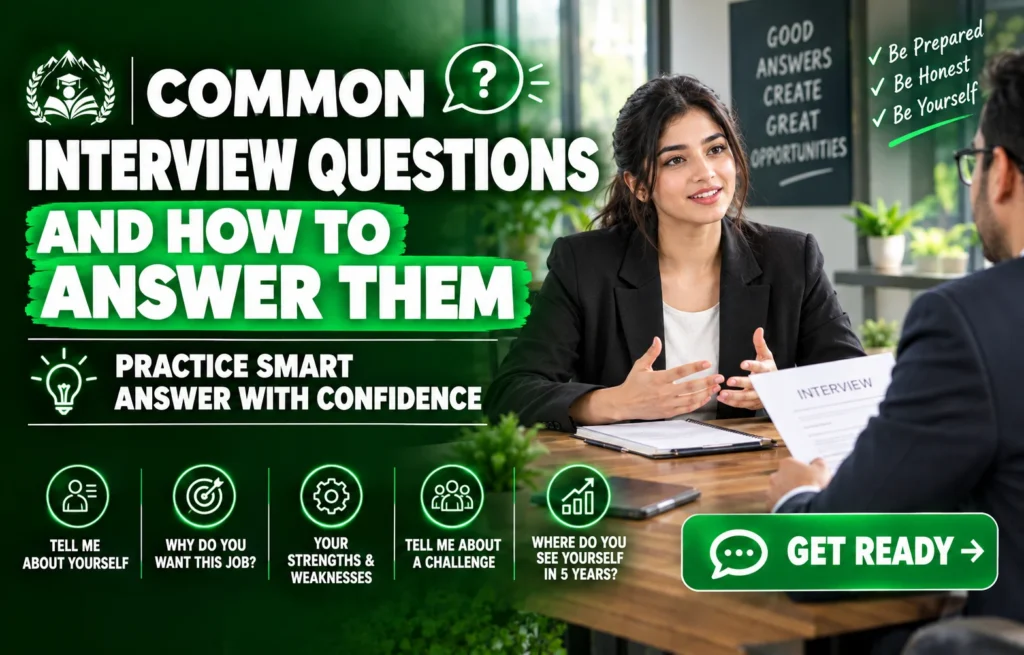
Instead, prepare a simple structure for your most likely questions:
- Tell me about yourself
- Why should we hire you
- What’s your biggest weakness
- Describe a challenge you handled
- Why this role/department
For each one, jot down two or three key points and one real example, rather than a full paragraph to recite. This keeps your answers sounding natural even when nerves kick in.
Expert Tip: Practice out loud, not just in your head. Reading an answer silently feels far more polished than it sounds when actually spoken under pressure.
Step 3: Prepare Your Documents in Advance
This sounds obvious, but it’s one of the most common last-minute panic points.
For FPSC/PPSC interviews, typically bring:
- Original CNIC
- Interview call letter
- Original educational certificates and transcripts
- Domicile certificate (if required)
- Passport-size photographs (as specified in the call letter)
For private-sector interviews, typically bring:
- Printed copies of your CV/resume
- Educational certificates or a portfolio, if relevant to the role
- A notepad and pen
Common Mistake: Assuming digital copies on your phone are sufficient. Many government interview venues specifically require original physical documents — check your call letter carefully.
Step 4: Plan Your Appearance and Logistics
Dressing: For both government and most private-sector interviews in Pakistan, formal and conservative dressing is the safer default — a well-ironed shirt and trousers or shalwar kameez for men, and modest, professional attire for women. Avoid anything overly casual or flashy; the goal is to look put-together, not to stand out through clothing.
Timing: Aim to arrive 20–30 minutes early. Government interview venues, in particular, often involve security checks and waiting areas that take longer than expected.
Route planning: If you’re unfamiliar with the venue, check the route the day before — especially in cities like Karachi or Lahore, where traffic can be unpredictable. Being late to an interview is one of the few mistakes that can disqualify you before you even speak.
Step 5: Do a Mock Interview
Ask a friend, senior colleague, or mentor to run through a few likely questions with you, ideally out loud and face-to-face rather than over text. This does two things: it gets you used to speaking your answers under mild pressure, and it often reveals gaps in your preparation you wouldn’t have noticed alone.
Tip: If you don’t have anyone available, recording yourself answering a question on your phone and watching it back works almost as well — you’ll notice filler words, pacing issues, or a lack of eye contact you weren’t aware of.
Government vs. Private Interview Preparation: Key Differences
| Preparation Area | Government (FPSC/PPSC) | Private Sector |
|---|---|---|
| Documents needed | Strict, original documents required | CV copies, portfolio (if relevant) |
| Research focus | Department function, policy context | Company projects, industry trends |
| Dress code | Formal, conservative, minimal variation | Formal, slightly more flexible |
| Arrival time | 20–30 minutes early (security checks) | 10–15 minutes early |
| Tone of answers | Structured, procedural, respectful | Slightly more conversational |
Common Mistakes That Undermine Good Preparation
- Preparing answers but not the logistics. A great answer means nothing if you’re 15 minutes late or missing a required document.
- Over-preparing memorized scripts. This makes answers sound stiff and falls apart under a follow-up question.
- Skipping research on the organization. Panels can immediately tell when a candidate hasn’t looked beyond the job title.
- Ignoring appearance. Even strong answers can be undercut by an appearance that looks rushed or overly casual.
- Not practicing out loud. Silent mental rehearsal rarely matches how an answer actually sounds when spoken under pressure.
Frequently Asked Questions
How many days before the interview should I start preparing?
Ideally, start at least a week in advance — enough time to research the organization, prepare answers, and do at least one mock interview without rushing.
What should I do the night before the interview?
Confirm your documents are ready, lay out your clothes, double-check the venue location and timing, and get a full night’s sleep rather than last-minute cramming.
Is it necessary to bring a printed CV even for government interviews?
Not usually required for FPSC/PPSC interviews since your application is already on file, but it doesn’t hurt to have one — check your specific call letter for exact requirements.
What if I get nervous despite preparing well?
Some nervousness is normal and even expected. Focus on your breathing, pause before answering if needed, and remember that composure under mild nervousness is viewed far more favorably than false overconfidence.
Should my preparation differ for a second or third interview round?
Yes — later rounds often go deeper into technical knowledge or department-specific scenarios, so review the details of the specific role more closely at each stage.
Final Word
Good interview preparation isn’t about memorizing the perfect answer to every possible question — it’s about covering all five areas: research, structured answers, documentation, appearance and logistics, and practice. Candidates who prepare across all five consistently walk into the room calmer and perform better than those who only focus on rehearsing answers. Give yourself enough time before the interview to work through each step properly, and you’ll walk in ready — not just hoping for the best.